
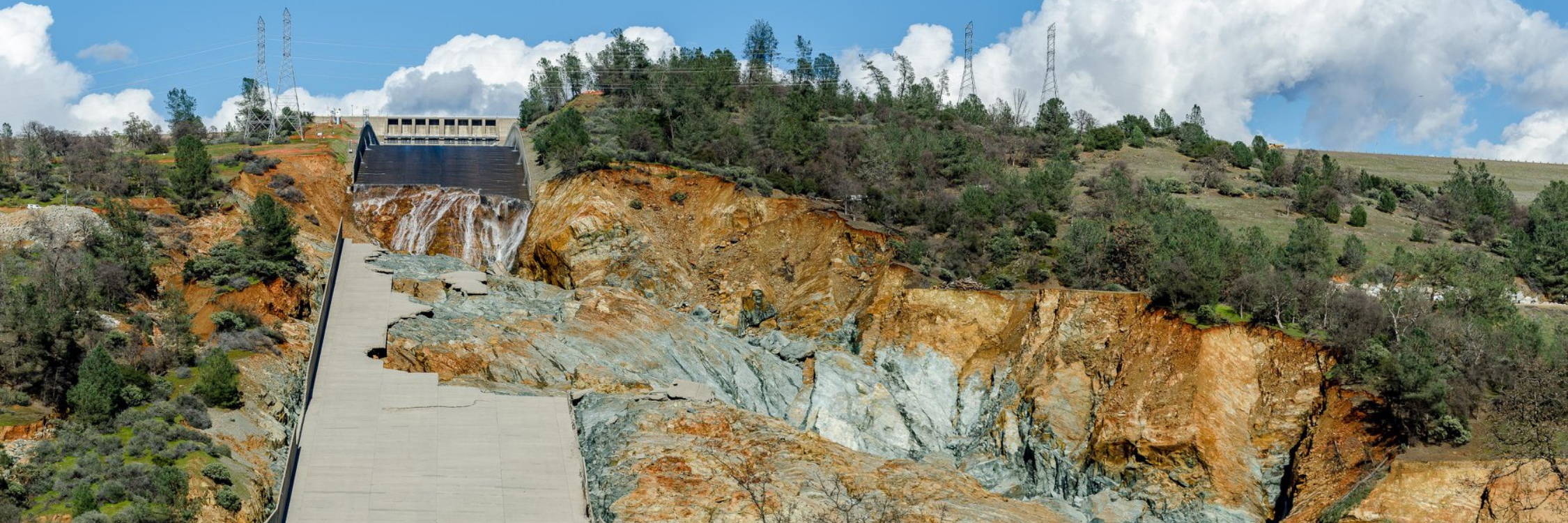
Oroville Dam
A State Asset, A Local Burden
California gets the water. Butte County carries the cost.
More than half a century ago, California made Butte County a promise: Host Oroville Dam, and the State would invest in recreation and economic opportunities to help offset the cost. The dam delivered for California. The promise to Butte County never materialized.
Today, Oroville Dam serves as the headwaters to a project that supplies water to 2/3 of Californians, while Butte County estimates it loses $20 million each year in lost property tax revenue and costs associated with hosting the facility.
Now California wants another 50-year license to operate the dam. Before FERC issues a new license, the State must restore balance to the community that has carried the financial and safety burdens for decades.
Help us ensure a fair deal for Butte County and its residents by reaching out to Governor Newsom and the Federal Energy Regulatory Commission.
The History
Rome had aqueducts. Manhattan has the Erie Canal. And California, arguably the most audacious economic experiment in human history, has the Oroville Dam.
Rising 770 feet above the Feather River, Oroville Dam is not just the tallest dam in the United States. It is the linchpin. The keystone fueling the 4th-largest economy in the world. Strip it away, and the Central Valley, which feeds a nation, goes dry. Southern California's 20+ million people scramble for water. 2.2 billion kilowatt-hours of annual electricity, enough to power every home in Butte County for two years, goes away.
This is what infrastructure actually means. The invisible skeleton inside the body of civilization that the average person only notices when it breaks.
Authorized by the California Legislature in 1951, completed in 1968, and operated by the Department of Water Resources (DWR) ever since, Oroville Dam is the cornerstone of the California State Water Project, a vast machine that captures the snowmelt of the Sierra Nevada and sends it hundreds of miles south, turning desert ambition into agricultural reality.
That water didn't just sustain California. It fueled the rapid growth of California into the largest economy and most populous state in the nation. Agriculture flourished in what should have been scrubland. Entire regions invented themselves on the assumption that the water would always come, and it did, because of one dam, in one county, on one river.
The county is Butte. The river is the Feather. And what happened there is a masterclass in how a society can be simultaneously magnificent and cruel.
The Oroville Dam and its facilities support the State’s $4 trillion economy. Butte County lives with the impacts of this infrastructure every day, including public-safety responsibilities, road and service costs, and the loss of roughly 41,000 acres from the local property-tax base.
Without meaningful compensation from the State, the County absorbs these costs and can’t invest that money elsewhere in the community.
Key Issues.
DWR’s failure to deliver on the original recreational promises continues to negatively impact the local community. While the State continues to reap the benefits of the dam, Butte County is left empty-handed while continuing to shoulder the enormous cost of hosting the facility. The annual financial loss, combined with DWR’s failure to fulfill its recreation development responsibilities, underscores the significance of DWR’s neglect and operational failures regarding the dam.

Undeveloped Recreation Facilities

Safety Failures
Strained County Services and Financial Impact
RESOURCES
Find links to historical reports, correspondence, and more.